


Blog
The Global Real Estate Market: Why the Middle East Is Leading the Next Investment Cycle

The global real estate market is entering a new phase of growth, and the Middle East has emerged as one of the most influential regions shaping international investment flows. As global capital searches for stability, scale, and long-term opportunity, investors are increasingly turning their attention to the Gulf and wider Middle East.
With ambitious government strategies, investor-friendly regulations, and world-class development pipelines, the region is no longer an emerging market—it is a global real estate powerhouse.
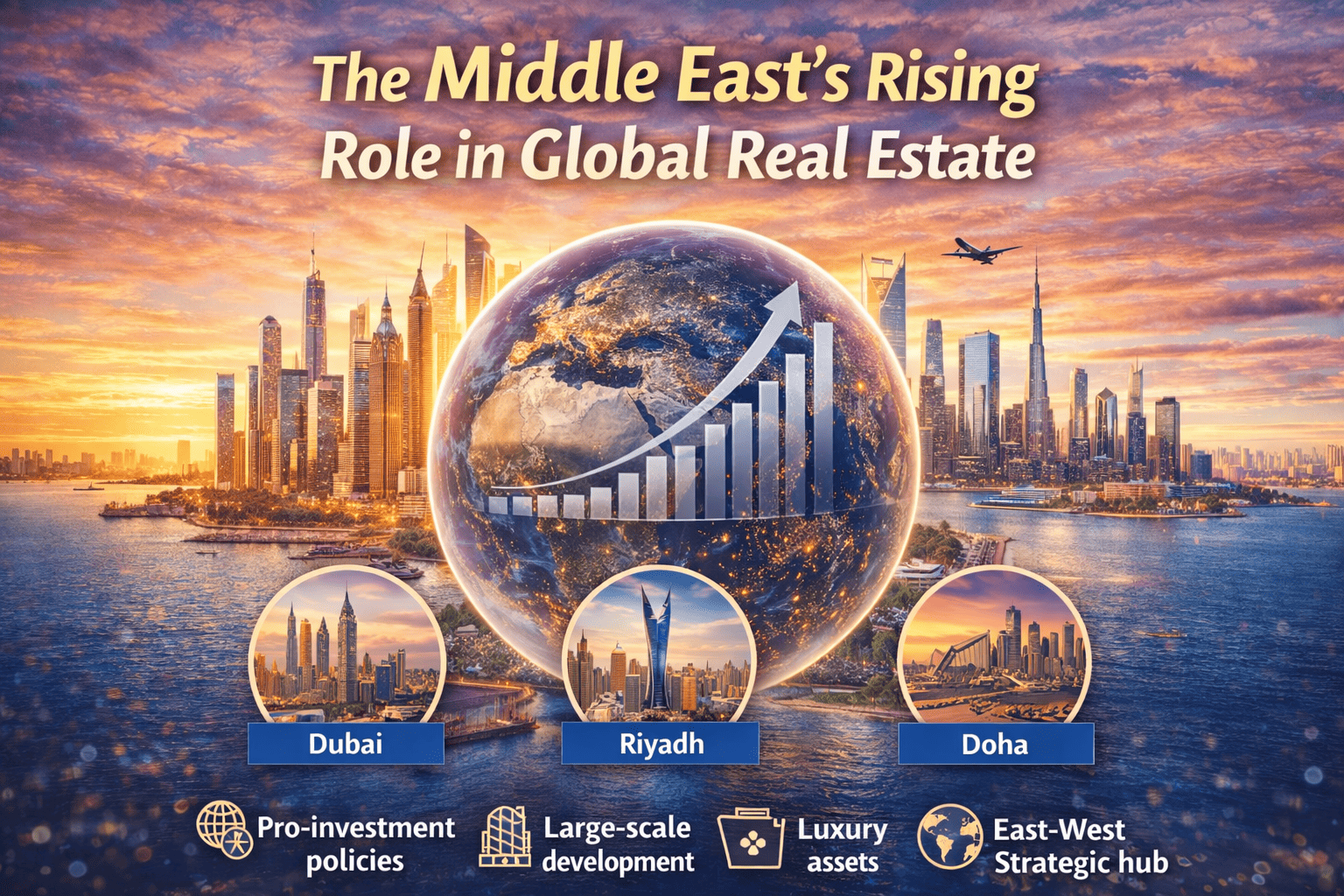
The Middle East’s Rising Role in Global Real Estate
Over the past decade, countries across the Middle East have repositioned themselves as open, transparent, and globally connected investment destinations. Capital is flowing into the region from Europe, Asia, Africa, and North America, driven by:
- Pro-investment government policies
- Large-scale urban and infrastructure development
- Strong demand for luxury and lifestyle assets
- Strategic geographic positioning between East and West
Cities such as Dubai, Riyadh, and Doha are now core stops on the global investment map.
Key Middle East Investment Markets
United Arab Emirates
The United Arab Emirates continues to lead the region in international real estate investment. Dubai, in particular, has become a magnet for:
- HNWIs and global entrepreneurs
- Family offices and private capital
- International developers launching flagship projects
Zero property tax, strong legal frameworks, and high rental yields make the UAE one of the most attractive real estate markets globally.
Saudi Arabia
Under Vision 2030, Saudi Arabia is executing one of the largest development programs in the world. Investment is flowing into:
- Mega-cities and mixed-use developments
- Hospitality and tourism assets
- Commercial and logistics real estate
For global investors, Saudi Arabia represents scale, long-term growth, and first-mover advantage.
Qatar
Qatar is consolidating its position as a premium, infrastructure-led real estate market. Post-World Cup investments have enhanced demand across:
- Residential and mixed-use developments
- Commercial districts
- Hospitality and lifestyle projects
Investment Themes Driving the Region
Across the Middle East, several dominant real estate themes are shaping investor interest:
- Luxury and branded residences
- Mixed-use and smart city developments
- Hospitality, resorts, and lifestyle assets
- Sustainable and ESG-aligned projects
- Logistics and data-driven infrastructure
These asset classes align closely with global investor demand, reinforcing the region’s international appeal.
Why Global Investors Are Allocating Capital to the Middle East
The Middle East offers a rare combination of:
- Political and economic stability in key markets
- Government-backed development pipelines
- Attractive yields and capital appreciation
- Clear long-term national visions
As traditional markets mature, many investors now see the Middle East as a core allocation, not an alternative.
The Role of Global Investment Platforms
As capital flows increase, global real estate platforms and exhibitions play a vital role in connecting Middle Eastern projects with international investors. These platforms provide:
- Direct access to decision-makers
- Market intelligence and deal flow
- Cross-border partnerships
- Trust and transparency in transactions
They are becoming essential infrastructure for the global real estate ecosystem.
Conclusion
The Middle East is no longer following global real estate trends—it is setting them. With unmatched ambition, scale, and investment momentum, the region stands at the center of the next global real estate cycle.
For investors, developers, and governments alike, the Middle East represents opportunity, resilience, and long-term growth.