




Blog
The Global Real Estate Market: Where Investment Is Heading Next

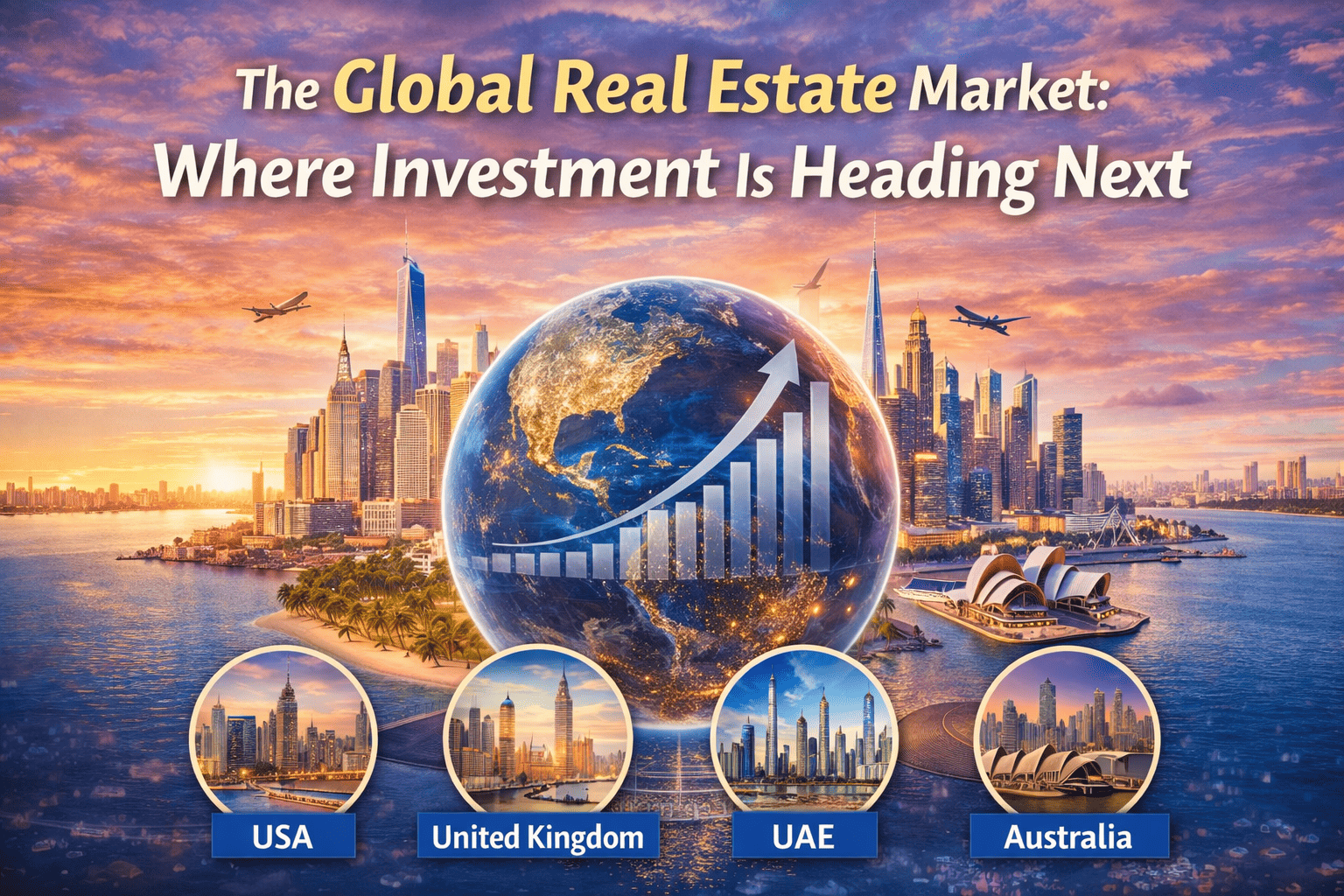
The global real estate market is entering a new investment cycle—one defined by capital mobility, strategic diversification, and a renewed focus on tangible, income-producing assets. As economic conditions stabilize across key regions, real estate is once again emerging as a preferred store of value for both institutional and private investors.
In this evolving landscape, global property markets are no longer viewed in isolation. Capital today flows across borders in search of yield, stability, and long-term growth.
A Trillion-Dollar Asset Class in Transition
Global real estate represents one of the world’s largest asset classes, with trillions of dollars in annual transaction volume. While recent years brought interest rate pressure and pricing corrections in some markets, these shifts have created new entry points for investors with long-term strategies.
Key drivers shaping the current market include:
- Cross-border capital diversification
- Inflation hedging through real assets
- Urbanization and population growth
- Demand for alternative and mixed-use assets
- Rising interest in lifestyle-driven investments
Key Global Investment Hotspots
North America
Markets such as New York City and Miami continue to attract institutional and international capital, particularly in:
- Multifamily and rental housing
- Commercial repositioning
- Luxury and branded residences
Middle East
The United Arab Emirates and Saudi Arabia are seeing unprecedented investment activity, driven by:
- Government-led mega projects
- Investor-friendly regulations
- High demand for off-plan and luxury developments
Europe
Countries such as United Kingdom, Portugal, and Spain remain popular for:
- Capital preservation
- Residency-linked investments
- Commercial and hospitality assets
Asia-Pacific
Emerging markets in Thailand, Indonesia, and Vietnam are attracting investors seeking:
- Higher yields
- Long-term growth
- Tourism-driven real estate
Shifting Investor Preferences
Investor behavior is evolving rapidly. Today’s buyers are more informed, data-driven, and internationally focused. Current trends include:
- Preference for income-generating assets
- Increased interest in branded residences and hospitality real estate
- Growing demand for ESG-compliant and sustainable developments
- Rise of family offices and private capital replacing traditional institutional dominance
These shifts are reshaping how projects are developed, marketed, and financed globally.
Why Global Platforms Matter More Than Ever
As real estate becomes increasingly international, global investment platforms play a critical role in connecting capital with opportunity. Investors want:
- Direct access to developers
- Transparency and market intelligence
- Curated, high-quality deal flow
- Face-to-face engagement in trusted environments
This is where international exhibitions, forums, and investment marketplaces are gaining renewed importance—acting as bridges between global capital and real assets.
Outlook for the Global Real Estate Market
Looking ahead, the global real estate market is expected to:
- See renewed transaction activity as interest rates stabilize
- Experience strong growth in luxury, hospitality, and mixed-use sectors
- Continue attracting cross-border capital, particularly from HNWIs and family offices
- Expand into new emerging markets alongside established global cities
Real estate remains one of the few asset classes that combines income, capital appreciation, and long-term security—making it central to global investment strategies in the years ahead.
Conclusion
The future of real estate is global, connected, and opportunity-driven. Investors who understand international market dynamics—and position themselves early—stand to benefit the most from the next growth cycle.
As global capital looks beyond borders, real estate remains at the center of wealth creation worldwide.